
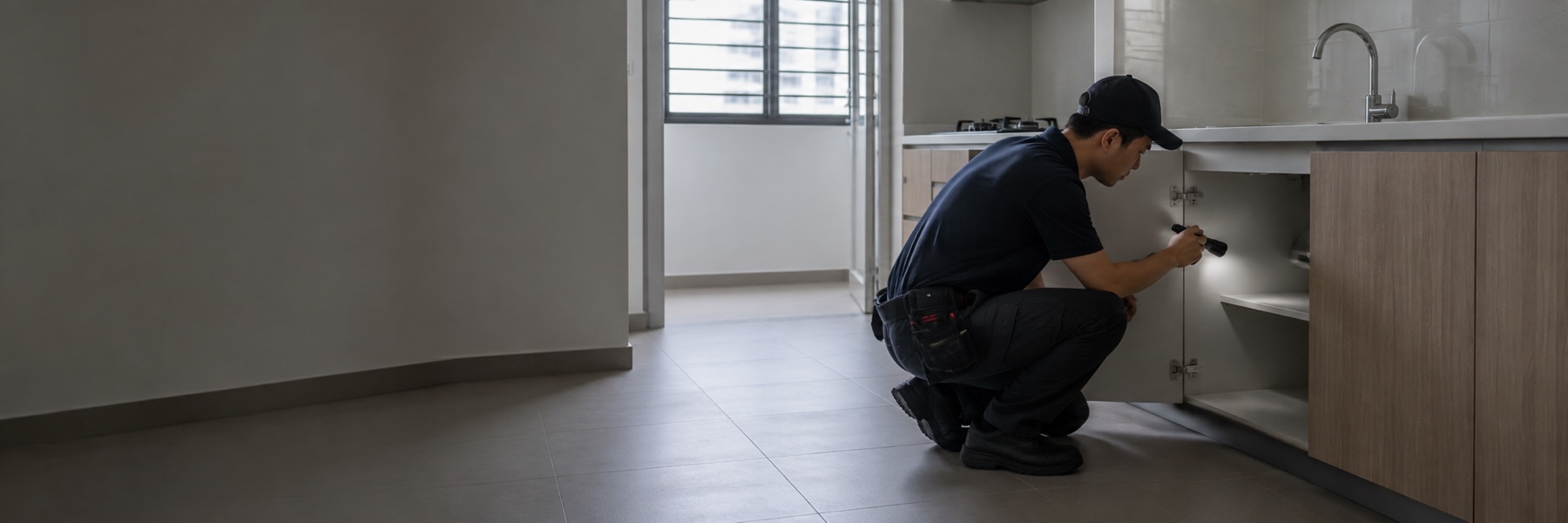
Start with a clearer picture of the new home
A vacant home provides useful access to cupboards, skirting, service areas and corners that become harder to inspect after furniture and belongings arrive. A pre-move-in pest visit can identify visible signs, likely entry routes and conditions that should be addressed before the household settles in.
Island Pest supports HDB flats, condominiums and landed homes across Singapore. Pre-move-in work is not one standard spray for every property. A newly completed unit, an older resale flat, a rental home and a landed house can have different histories and pest pressures. We begin with the property, evidence and recent renovation or vacancy details before recommending treatment.
Contact us once major dusty works and heavy cleaning are sufficiently complete for an inspection, but before fixed access is blocked by stored boxes or furniture where practical. Tell us the handover date, property type, renovation status and any pests or damage already noticed so the visit can be planned appropriately.
How the service works
Tell us
Share the site, signs, affected areas and operating constraints
Inspect
Assess relevant accessible areas and conditions supporting activity
Recommend
Explain the findings, proposed scope and required preparation
Treat & review
Complete the agreed work and outline monitoring or next steps
PEST CONTROL BEFORE YOU OCCUPY A HOME
What can be checked before move-in
The inspection focuses on accessible areas and evidence. Kitchens and bathrooms often provide food, moisture, drains and service routes; bedrooms and built-in carpentry may show signs of termites or bed bugs from previous occupation; balconies, yards and external edges can reveal mosquito breeding risks, nests or entry gaps. Shared risers, refuse chutes and neighbouring units may also influence activity in apartments.
Areas worth making accessible include:
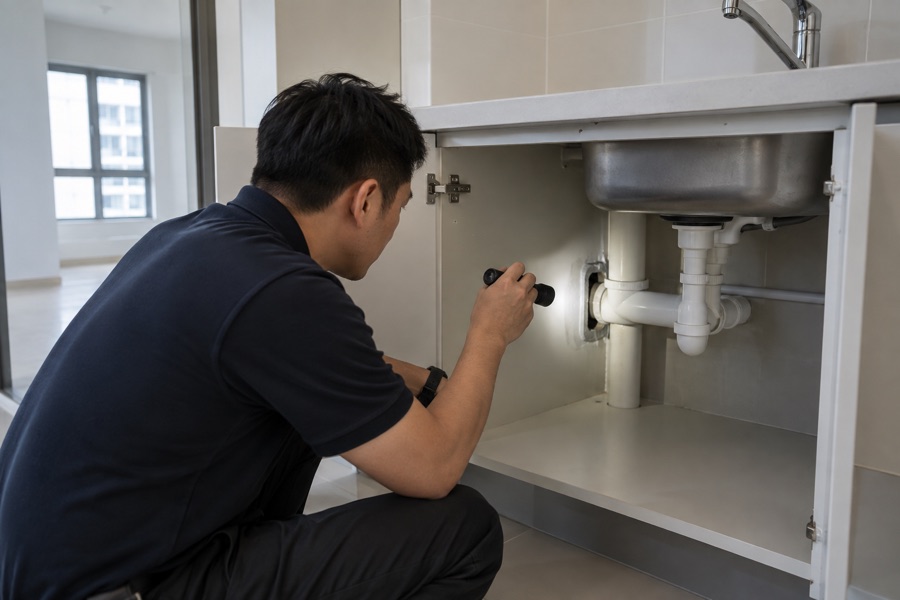
- inside and beneath kitchen and vanity cabinets;
- floor traps, pipe entries, service yards and utility spaces;
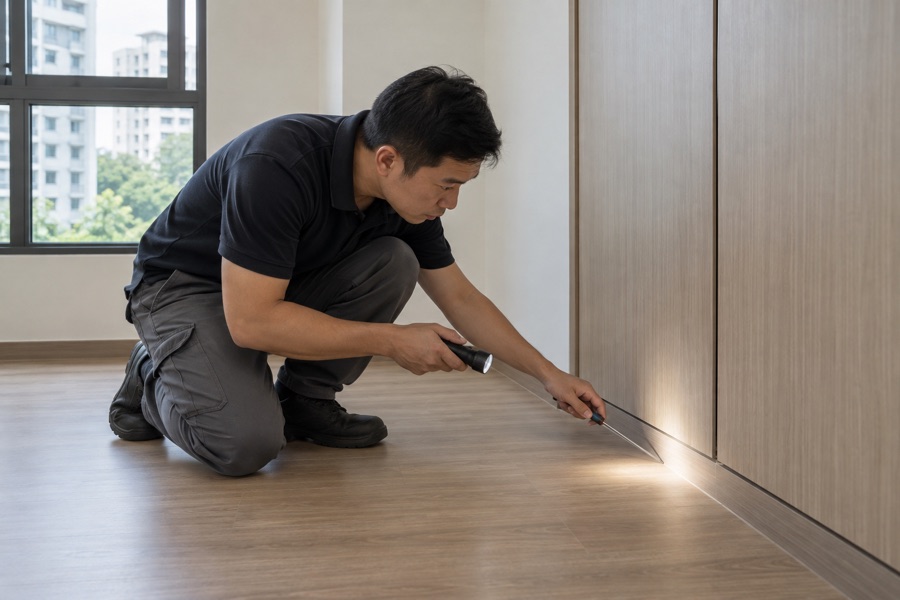
- skirting, wall-floor junctions and gaps around doors or windows;
- built-in wardrobes, timber fittings and stored cardboard;
- balconies, planters, drains and outdoor storage;
- ceiling access points and service cupboards where safely reachable; and
- areas where droppings, wings, egg cases, bites or damage were reported.
Pest-specific findings need pest-specific decisions
General prevention does not replace treatment of a confirmed infestation. Cockroaches may require attention to harbourage and drains; ants may need colony-focused baiting; termite evidence should be assessed before timber is concealed or discarded; and suspected bed bugs require confirmation rather than treatment based on bites alone. Rodent evidence should lead to a review of entry points as well as control.
Where no active pest is confirmed, the recommendation may focus on proofing, moisture, storage and monitoring rather than unnecessary pesticide use. Where treatment is appropriate, we explain the target pest, included areas, preparation, expected disruption and follow-up before the work is agreed.
Timing the visit around renovation and cleaning
Inspection is more useful when surfaces are visible and construction dust or debris does not hide evidence. Treatment applied too early may be removed by later hacking, painting, washing or cabinet installation. At the same time, waiting until every box and item has arrived can make access difficult. Discuss the actual works programme with us instead of relying on a fixed number of days before move-in.
If contractors are still active, identify which rooms are complete and whether any pesticide, termite treatment or chemical has already been applied. Keep product names, invoices or treatment records where available. This reduces the risk of conflicting work and helps distinguish fresh activity from old signs left by a previous occupant.

Preparing the property
Provide safe access to the areas of concern, remove loose rubbish and avoid covering evidence before it is documented. Do not spray insects or trails immediately before the visit if doing so will make identification more difficult. Photographs and the exact location of each sighting can be helpful, especially when activity occurs only at night.
Tell us about children, pets, allergies or sensitivities, condominium access rules and the intended occupancy date. Preparation and re-entry instructions depend on the treatment selected. Food, utensils, toys and personal items may need to be protected or kept away from specific areas, so follow the instructions supplied for the appointment.
After inspection or treatment
Complete recommended repairs or housekeeping actions where possible before moving in. These may include sealing gaps, correcting leaks, clearing standing water, disposing of infested material appropriately or improving storage. Pest-control work cannot compensate indefinitely for an open entry route or recurring moisture source.
Continue observing the property after occupation. New deliveries, groceries, second-hand furniture, plants and everyday building movement can introduce or reveal pests that were not active during a single visit. Record new signs and contact Island Pest if follow-up is recommended or activity changes. For public-health vector work, the National Environment Agency explains how to engage a registered Vector Control Operator.
A room-by-room handover check
Walk through the home before the appointment and note anything that may be pest-related. In the kitchen, check cabinet corners, hinges, appliance spaces and pipe openings. In bathrooms and the service yard, look around drains, traps and damp cupboards. In bedrooms, inspect built-in furniture, skirting and any items left by the previous occupant. For landed homes, include the perimeter, garden storage, roof-access areas and places where utilities enter.
Do not assume that every mark is active infestation. Old cockroach droppings, empty termite tubes or historic damage may remain after earlier treatment. Conversely, fresh wings, changing timber damage or repeated live activity deserve attention. Photograph the wider location as well as the close-up so the technician can understand where the evidence sits.
What pre-move-in treatment can and cannot do
A well-timed visit can improve access and deal with identified risks before occupancy, but it cannot seal every route in a shared building or prevent pests from arriving later with goods, furniture or neighbouring activity. It also cannot replace repair of a leak, broken drain fitting or building opening. Recommendations should therefore separate treatment from the practical property work needed afterward.
Be cautious with broad guarantees for an empty home when no pest has been identified. The value of the visit lies in inspection, evidence-based treatment where appropriate and a clear set of next steps. If a specialist termite or bed-bug programme is recommended, confirm its preparation and schedule separately rather than assuming it is part of a general application.
Coordinating buyers, tenants and contractors
If you do not own the property, clarify permission for treatment and repairs with the landlord or agent. Condominium residents may need visitor registration, contractor passes or management approval for access to shared service areas. Renovation contractors should be told where monitoring points or treated areas must remain undisturbed.
Keep the final service information with the home handover records. It can help the household follow preparation advice, observe relevant areas and explain earlier work if another visit is required.
Frequently Asked Questions
When should I arrange pre-move-in pest control? | Usually after major dusty renovation and cleaning work is complete enough for inspection, but before furniture blocks access. Share the actual renovation and move-in schedule with us. |
Does every new home need pesticide treatment? | Not necessarily. The recommendation should reflect the evidence, property and risk conditions. Proofing, moisture correction or monitoring may be more appropriate where no active infestation is found. |
Can you inspect an HDB flat, condo or landed home? | Yes. Island Pest provides residential services for all three property types, with the scope adapted to the unit and accessible areas. |
Should I arrange termite treatment as part of a general visit? | Suspected termite evidence should be assessed separately because termite methods differ from general household pest treatment. Show us any mud tubes, wings or timber damage. |
Can I move in immediately after treatment? | Re-entry depends on the selected method and areas treated. Follow the preparation, ventilation and re-entry instructions supplied for the agreed service. |
What information should I send before booking? | Provide the property type, postal code, renovation status, move-in date, pest signs, affected rooms and photographs where available. |