
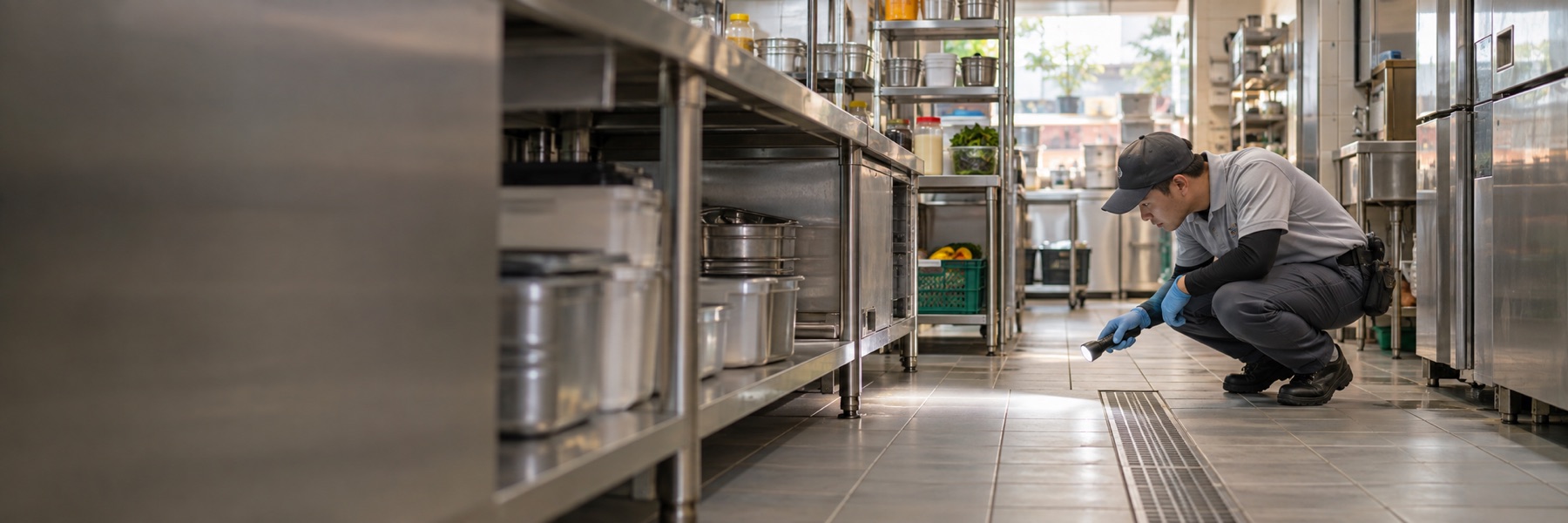
Pest control planned around a working food premises
Restaurants, cafés, bars, food stalls and commercial kitchens have little room for unresolved pest activity. Food, warmth, water, deliveries, drains and waste can support pests in areas that remain busy throughout the day. Island Pest begins with the signs found on site and the way the premises operates before recommending an appropriate programme.
A food-business visit should consider both customer-facing and back-of-house areas. A cockroach sighting at a service counter may lead back to a warm equipment void; flies near tables may be linked to a drain or waste route; rodents may enter through a delivery bay or damaged door seal. Treating only the place where a pest was seen can miss the conditions allowing activity to continue.
We provide pest-control support for commercial premises across Singapore. Tell us the type of outlet, the pests or signs observed, the affected areas, operating hours and any upcoming inspection or access constraints. We can then arrange a site assessment and discuss a scope suited to the premises.
How the service works
Tell us
Share the site, signs, affected areas and operating constraints
Inspect
Assess relevant accessible areas and conditions supporting activity
Recommend
Explain the findings, proposed scope and required preparation
Treat & review
Complete the agreed work and outline monitoring or next steps
PEST MANAGEMENT FOR FOOD BUSINESSES
Common pest risks in restaurants and kitchens
Different pests use food premises in different ways. Correct identification matters because one general application is not a complete answer to every problem. The following issues commonly require attention:
- Cockroaches: activity around warm appliances, cupboards, floor traps, service ducts and damp voids. See our cockroach-control service.
- Flies: repeated adults around preparation, dining, waste or drain areas can indicate a nearby breeding source. See our fly-control service.
- Rats and mice: droppings, gnawing, rub marks or damaged stock require an assessment of entry, harbourage and food access. See our rodent-control service.
- Ants: trails may connect food or moisture to nests in walls, fittings, external areas or neighbouring spaces. See our ant-control service.
- Mosquitoes: standing water in outdoor service areas, roof spaces, drains or containers can support breeding. See our mosquito-control service.
What the site assessment considers
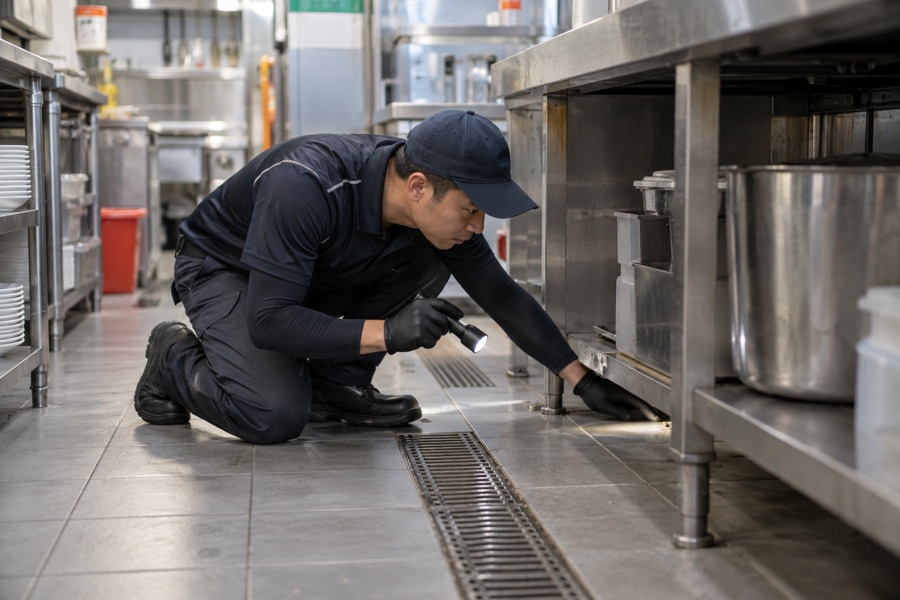
The assessment follows the flow of people, ingredients, packaging and waste through the premises. Relevant areas may include delivery points, dry stores, cold-room surrounds, preparation benches, equipment bases, floor traps, grease and wash areas, false ceilings, staff lockers, dining spaces, bin centres and the external perimeter. We also consider when activity occurs and whether neighbouring units or shared building routes may be involved.
Housekeeping is only one part of the picture. Damaged seals, service penetrations, condensation, persistent moisture, inaccessible food residues and gaps around pipes can create harbourage or entry even in a well-run outlet. Findings should separate immediate pest activity from structural or operating conditions that require action by the tenant, landlord, managing agent or another contractor.
Planning treatment with food and operations in mind
The appropriate method depends on the identified pest, activity level and affected area. Before work begins, the agreed scope should state which spaces are included, what preparation is required, which products or devices will be used, whether food or utensils must be removed or covered, and when the area can return to normal use. Treatment should be scheduled so that staff can complete the required preparation and avoid interfering with active food preparation.
Some issues need a corrective visit followed by monitoring; others are better managed through scheduled inspections and preventive actions. We explain the proposed approach after the assessment rather than assuming that every outlet needs the same package. Singapore food businesses should also follow the conditions and guidance applying to their licence. The Singapore Food Agency’s guidance for licensed food-retail premises is a useful starting point.

A practical routine for ongoing control
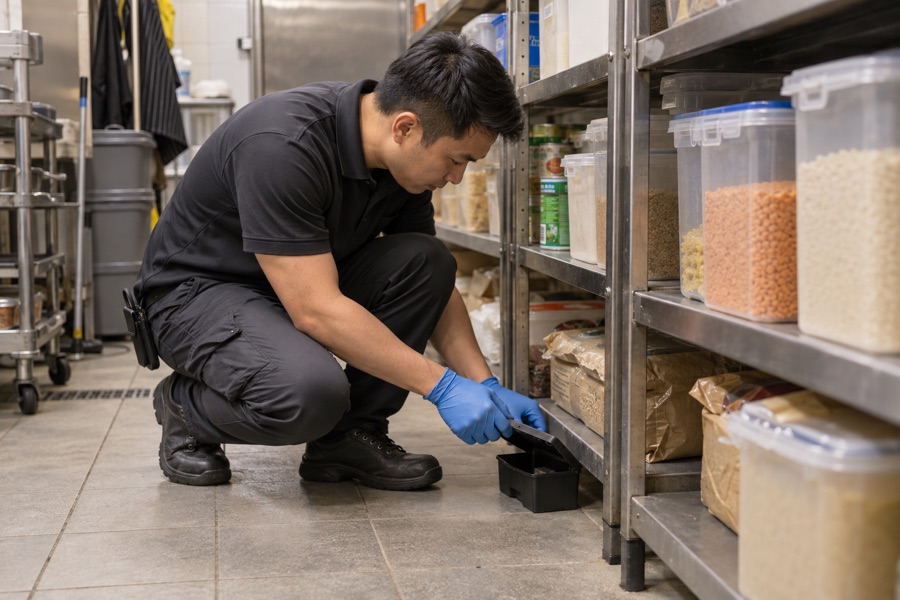
Recurring service works best when it supports the outlet’s own daily checks. Staff should know how to report sightings, protect food, clear waste, check deliveries and avoid moving monitoring devices. The pest-control visit can then focus on observed activity, device condition, changes since the previous visit and areas needing corrective action.
Service findings are most useful when they identify the location, pest evidence, action taken and recommended next step. A recurring issue should prompt a review of the surrounding cause rather than an automatic repeat of the same treatment. For example, repeated flies may justify checking drains and waste flow, while recurring rodents may point to a door gap, service penetration or unmanaged external food source.
Preparing for a visit
Before the appointment, gather recent sighting details, photographs, previous service records and any notes from staff. Identify restricted rooms, keys, ceiling or plant access and the person authorised to discuss findings. Tell us about active food preparation, sensitive equipment, cleaning schedules and any pesticide recently applied by staff or another contractor.
After the service, follow the preparation, re-entry, cleaning and monitoring instructions provided for the selected method. Do not move or spray over bait and monitoring placements unless instructed. Continue to record activity between visits so the pattern can be reviewed at the next attendance.
Responding to repeated sightings
A repeated sighting is useful information, not only a reason to repeat the last application. Record the time, exact place, pest or evidence and nearby activity. Note whether it followed a delivery, deep cleaning, drain blockage, equipment move or change in waste collection. This context can help distinguish a surviving local harbourage from a new introduction or a route shared with the wider building.
If the same issue returns, review whether every earlier recommendation was completed and whether the premises has changed. A newly installed appliance can create a warm void; damaged floor finishes can hold residues; a door that no longer closes properly can open an entry route. In a multi-unit building, the tenant may also need to coordinate with the landlord or managing agent where risers, ceilings, drains or bin areas sit outside the outlet’s control.
Responsibilities within the food business
Pest control works alongside—not in place of—daily hygiene and building maintenance. Outlet staff should clean spills, protect ingredients, rotate stock, remove waste, check incoming goods and report activity. Management should make time for access and corrective work. The pest-control provider assesses evidence, attends monitoring or treatment points and explains recommendations within the agreed scope.
Assign a person to receive reports and follow up actions. Recommendations such as repairing a drain cover, clearing inaccessible residue or sealing a wall opening can otherwise remain unresolved between visits. For businesses with several shifts, a simple sighting log helps information from night staff or cleaners reach the person who meets the technician.
Reviewing a proposed programme
Before approving service, check that the proposal identifies the outlets and areas included, pests covered, planned frequency, visit timing, preparation, record format and treatment of urgent requests. Ask how activity will be evaluated and when the programme will be reviewed. A useful scope should be specific enough for both the outlet and service team to understand what is expected.
The appropriate plan depends on the site assessment. Island Pest does not assume that every food business needs identical devices or treatment. Contact us to discuss the premises and arrange the next step.
Frequently Asked Questions
Which F&B premises can request an assessment? | Restaurants, cafés, bars, food stalls, kitchens and other food-handling premises can contact us. We confirm the exact site and service scope before work is arranged. |
Which pests are commonly addressed in food premises? | Cockroaches, flies, rodents and ants are common concerns, but the site should be assessed because the correct approach depends on the pest and conditions found. |
Can service be planned around operating hours? | Tell us the outlet’s operating, delivery and cleaning schedule. We will discuss a practical appointment time and the preparation needed for the proposed work. |
Will Island Pest provide preparation instructions? | Yes. Preparation, access, food protection and re-entry requirements depend on the selected method and should be explained before treatment. |
Is one treatment enough for a restaurant pest problem? | That depends on the pest, activity level and contributing conditions. Some localised issues may need a corrective visit, while ongoing risks may justify scheduled inspection and monitoring. |
Can pest-control work guarantee an inspection result? | No contractor should promise the outcome of a regulatory inspection. Pest management should support the premises’ wider hygiene, maintenance and food-safety responsibilities. |