

Move from reactive call-outs to a defined programme
A commercial pest-control contract should make responsibilities, visit scope and follow-up clearer. Instead of treating every sighting as an isolated event, scheduled inspection and monitoring can help the business identify patterns, respond to changing conditions and record the actions taken.
Island Pest supports commercial premises across Singapore, including single-site and multi-site operations. The programme should reflect the property, industry, pest risks, operating hours and access arrangements rather than relying on one standard checklist. A small office pantry, a restaurant kitchen and a large warehouse do not present the same risks even when the same pest is involved. Compare our F&B pest-control service and warehouse and factory service when defining a site-specific scope.
Contact us with the premises type, number of locations, current concerns and any reporting or scheduling requirements. We can arrange an assessment and discuss whether a one-off corrective service or an ongoing programme is the more appropriate route.
How the service works
Tell us
Share the site, signs, affected areas and operating constraints
Inspect
Assess relevant accessible areas and conditions supporting activity
Recommend
Explain the findings, proposed scope and required preparation
Treat & review
Complete the agreed work and outline monitoring or next steps
PLANNED PEST MANAGEMENT FOR BUSINESSES
What a commercial pest-control contract can cover
The contract should begin with a clear description of the included premises, pests, areas and activities. Depending on the agreed scope, a programme may include scheduled inspections, monitoring-device checks, targeted treatment, observations on entry or harbourage, and recommendations for housekeeping, proofing or maintenance. Work outside the routine scope should be identified rather than assumed.
A useful proposal can address:
- the buildings, floors, units, outdoor areas and special rooms included;
- the pests covered and how additional or unusual pests will be assessed;
- the planned attendance frequency and service windows;
- the monitoring or control points used at the site;
- the preparation and access expected from the customer;
- how urgent sightings between visits are reported and handled;
- the findings, treatment and recommendations recorded after attendance; and
- the process for reviewing recurring activity or changing the programme.
Choosing a frequency
Frequency should reflect risk rather than habit alone. Food, waste, water, high visitor numbers, deliveries, dense storage, neighbouring units and outdoor conditions can all affect how quickly activity develops. A site with a history of rodents or German cockroaches may need closer monitoring than a low-risk office without food preparation. Seasonal changes, renovation, tenancy works or new operating processes can also justify a temporary review.
More visits do not automatically solve a problem if structural gaps, leaks, waste handling or stock practices remain unchanged. The programme should connect observations to practical corrective work and identify who is responsible for each action. This makes it easier to distinguish pest-control activity from repairs, cleaning or building works that need another party.
Records and review
Each visit should produce a usable record of the areas checked, signs found, devices or treatment attended to and recommendations raised. The customer should keep those records with relevant cleaning, maintenance or incident information. When activity continues, the history can help show whether the pattern is localised, spreading or linked to a repeated operating condition.
The National Environment Agency’s guidance on engaging a Vector Control Operator advises customers to define the required scope, monitor the work and retain records of inspections, findings and treatment. The business remains responsible for reviewing the contractor’s recommendations and arranging actions that fall outside pest-control work.


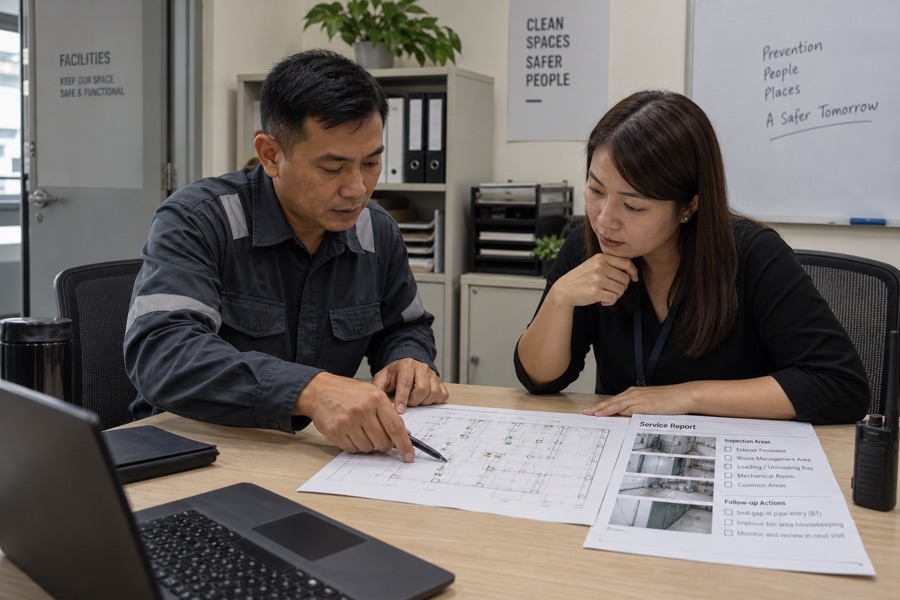
Working across one site or several locations
A multi-site programme needs enough consistency for management oversight while still allowing each property to reflect its own risks. Common naming, contact routes and report fields can help the customer compare activity, but the devices and visit tasks should follow the layout and use of the individual site. A recurring problem at one location should not automatically change treatment at every other branch.
Before commencement, identify site contacts, access and induction requirements, service restrictions, permit or security procedures and who may approve extra work. If premises are occupied during service, discuss how areas will be isolated and how staff or customers will be informed where necessary.
Corrective and preventive actions
Active infestation may require targeted treatment alongside monitoring. Prevention may involve recommendations to seal gaps, repair doors, remove standing water, improve storage clearance, adjust bin practices or investigate a drainage problem. We explain the observed condition and the pest-control action proposed; building alterations and specialist repairs should be separately scoped.
A contract should be reviewed when the property changes. New tenants, kitchens, storage layouts, landscaping, construction work or operating hours can create different pressures. Sharing these changes with the service team helps keep the programme aligned with the real site.
Defining responsibilities before commencement
A clear contract states what the service provider will inspect or treat and what the customer must make accessible. It should identify who maintains monitoring points, who receives reports and who can authorise additional work. If ceilings, plant rooms, roof areas, tenant units or external grounds are excluded, that boundary should be visible in the scope rather than discovered after activity is reported.
Preparation also needs an owner. Stock may need to be moved, food protected, rooms opened or staff informed. Some recommendations—such as sealing a service gap, repairing drainage or changing waste arrangements—belong to facilities or operations. Recording an owner and due date helps prevent the same unresolved condition appearing on every report.
Escalating urgent or unusual activity
The programme should explain how to report a pest found between routine visits. Useful information includes the site, room or zone, time, photographs, number observed and any damaged material. Staff should avoid disturbing monitoring points or applying unrecorded pesticide because this can obscure evidence and interfere with the agreed approach.
An unusual pest may fall outside the standard contract and require identification before a quotation is provided. Likewise, a widespread infestation, inaccessible source or neighbouring activity may require a revised scope. Clear escalation avoids promising that every possible pest or condition is automatically covered.
Reviewing whether the programme is working
Performance is better judged through evidence and trends than by an unrealistic promise that no pest will ever enter. Review sightings, captures, treatment points, recurring locations and completed corrective actions. A falling pattern can support continuation of the plan; a static or rising pattern should trigger investigation of the cause, service design and outstanding site actions.
Periodic review is also an opportunity to remove redundant points, add coverage where risk has changed and update contacts or access. Island Pest can discuss an appropriate review cycle after understanding the premises and reporting needs.
Frequently Asked Questions
Does Island Pest offer both one-off and recurring commercial service? | The suitable arrangement depends on the pest, site and operating risk. Contact us for an assessment and a scope based on the premises. |
Can a contract cover more than one business location? | Island Pest supports single-site and multi-site businesses. The included locations, contacts, schedule and reporting expectations should be defined in the proposal. |
How often should a commercial premises be inspected? | There is no single frequency for every business. Food handling, storage, pest history, building condition and operating environment should guide the schedule. |
What should a service record include? | A useful record identifies the visit date, areas checked, pest evidence, actions taken and recommendations requiring follow-up. |
Are repairs and proofing included in routine pest control? | Not automatically. Recommendations may identify gaps or defects, but repairs or building work should be expressly included or arranged separately. |
What happens if activity appears between visits? | Record the location, time and evidence and contact the service team. The response depends on the pest, urgency and arrangements in the agreed programme. |