
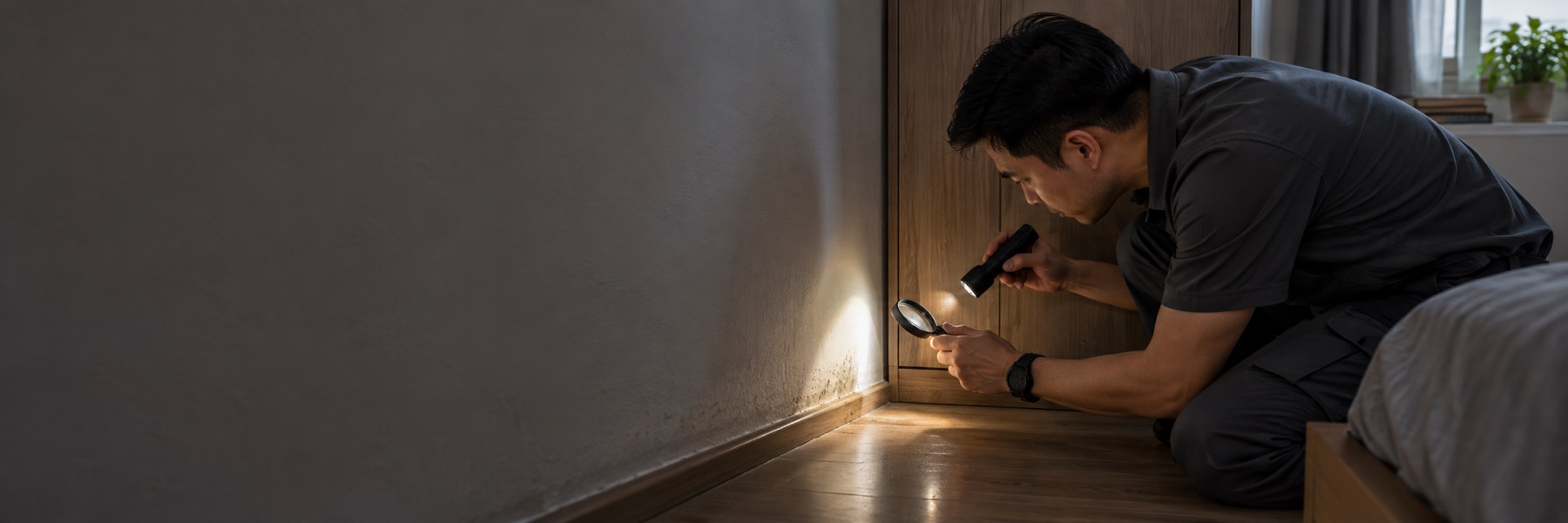
Tiny insects on walls, cupboards or paper?
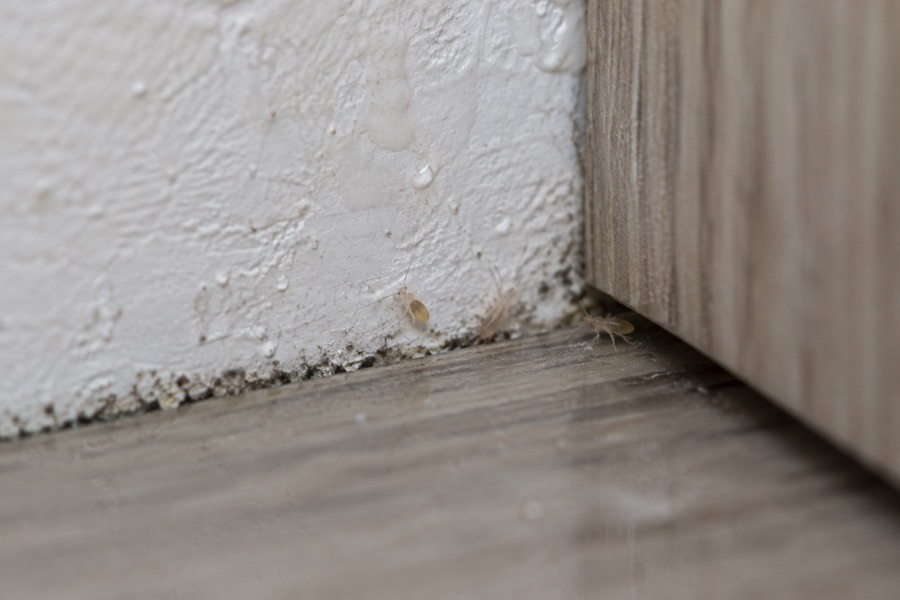
Booklice, also called psocids, are very small insects often associated with humid areas and microscopic mould growth. They may appear on walls, ceilings, cupboards, books, cardboard or stored materials. Their presence can be frustrating, but correct identification and moisture control are important before treatment is selected.
Booklice are not the same as head lice, bed bugs or termites. They are commonly pale, grey or light brown and may be difficult to see without close inspection. Because several tiny insects can look similar, photographs or a specimen can help, but an assessment may still be needed to confirm what is present and where activity is concentrated.
Island Pest can review booklice concerns in homes and suitable business premises in Singapore. Tell us where the insects appear, when they were first noticed, whether the area feels damp or has visible mould, and what cleaning, painting or pesticide work has already been attempted.
How the service works
Tell us
Share the site, signs, affected areas and operating constraints
Inspect
Assess relevant accessible areas and conditions supporting activity
Recommend
Explain the findings, proposed scope and required preparation
Treat & review
Complete the agreed work and outline monitoring or next steps
INSPECTION-LED HELP FOR BOOKLICE CONCERNS
Why booklice appear indoors
Booklice feed on microscopic fungi, mould and organic material rather than on people. Singapore’s humid conditions can support them where ventilation is limited or surfaces remain damp. New plaster, wallpaper adhesive, timber, cardboard and recently completed renovation materials may retain moisture. Leaks, condensation, wardrobes against cool walls and closed rooms can also create local conditions that favour activity.
Common places to check include:
- walls and ceilings near bathrooms, air-conditioning or external moisture;
- wardrobes, cabinet backs, drawers and shelving;
- books, paper files, cardboard boxes and stored packaging;
- window surrounds and poorly ventilated corners;
- wallpaper, timber surfaces and recently renovated rooms; and
- dry-food or storeroom areas where a different stored-product pest may be present.
Confirm the pest before treating
Booklice can be confused with mould mites, thrips, springtails, young bed bugs or other small insects. Location and behaviour provide useful clues, but appearance alone may not be enough. Bed bugs are associated with sleeping areas and physical evidence such as spotting, cast skins or live insects; termites may leave wings, mud tubes or timber damage; springtails are often noticed in very damp places and can jump.
A careful inspection looks at the insects, distribution and conditions supporting them. If the evidence points to another pest, the service should follow that pest’s biology rather than continuing with a booklice assumption. Share clear close-up photographs if possible and avoid crushing or spraying every specimen before identification.
Treatment and moisture must be considered together
A targeted application may reduce active booklice where it is appropriate for the surface and room. However, pesticide alone may give only temporary relief if humidity, mould or damp material remains. The plan should also identify practical environmental actions such as increasing ventilation, using appropriate dehumidification, drying affected materials, fixing leaks and removing heavily infested disposable cardboard or paper.
Mould remediation, leak repair, air-conditioning work and building waterproofing are separate services unless expressly included. If staining, persistent dampness or extensive mould is present, the underlying building or indoor-environment issue may need assessment by the appropriate specialist. Island Pest will explain the pest-control scope and the actions that remain the property owner’s responsibility.
Preparing for a booklice visit
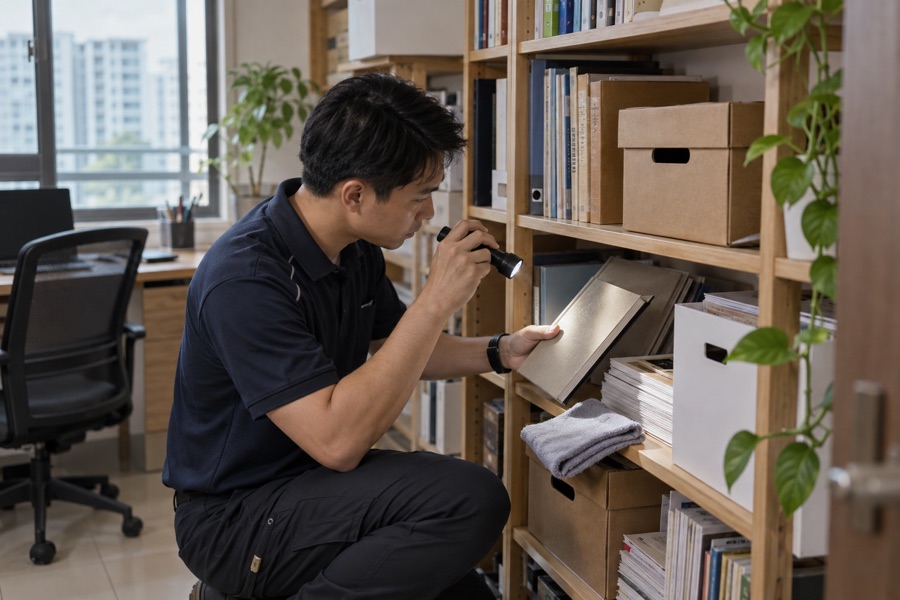
Note the rooms and surfaces affected and whether numbers change after rain, air-conditioning use or periods when the room is closed. Provide photographs showing both the insect and the wider location. Tell us about recent renovation, leaks, mould cleaning, painting, fogging or household pesticide use. If activity is inside cupboards, make the relevant shelves accessible but do not discard all items before the pattern is reviewed.
Preparation for treatment depends on the proposed method. Books, food, utensils, clothing, toys and pet items may need to be removed or protected from the immediate area. Follow the supplied instructions and do not return items until the relevant surfaces are dry or the advised re-entry period has passed.
Reducing recurrence
Monitor humidity and look for the reason one surface or room remains favourable. Open cupboards where practical, avoid pressing boxes against damp walls, improve air movement and remove unnecessary cardboard. Repair water entry and dry cleaned areas thoroughly. A dehumidifier can help some rooms, but it should be sized and operated appropriately and cannot repair an active leak.
Booklice numbers may not disappear instantly from every hidden void. Follow-up should review whether activity is falling and whether the environmental action is working. If insects continue despite dry conditions, identification should be reconsidered rather than repeatedly applying the same treatment without new evidence.
Cleaning and handling affected items
Use gentle cleaning appropriate to the material and avoid soaking paper, timber or wall finishes. Vacuuming can remove visible insects and debris from suitable surfaces, but dispose of collected material promptly and clean the equipment as appropriate. Wipeable shelves may be cleaned and dried fully before items are returned. Valuable books, artwork or sensitive records may need advice from a conservator rather than household treatment.
Discarding every item is rarely a useful first response. Begin by separating clearly affected disposable cardboard or spoiled material and checking adjacent belongings. Store dry items in clean, closed containers where practical. If insects are found in food packaging, isolate the product and confirm whether the pest is actually booklice or a stored-product beetle or moth.
Understanding humidity readings
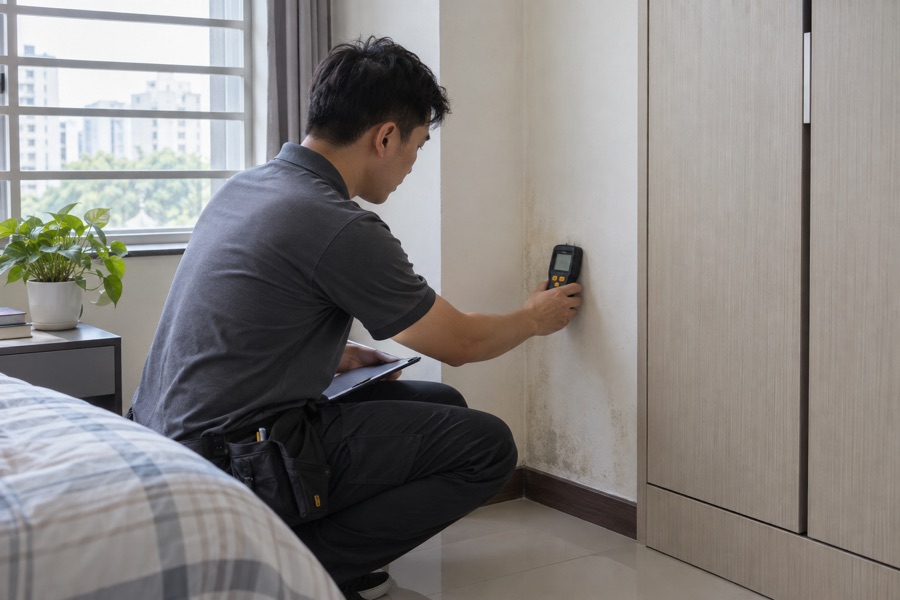
A room humidity reading is only one clue. Conditions can differ inside a closed wardrobe, behind furniture or on a cool wall. Humidity also changes across the day and with air-conditioning, rain and ventilation. Look for patterns instead of relying on a single reading taken in the centre of the room.
Where a wall remains damp, investigate the source. Condensation, plumbing leakage, external water entry and moisture retained after renovation require different remedies. Pest treatment does not diagnose or repair those building conditions. Improving ventilation and drying the surface are useful, but active water entry should be referred to the relevant property or building specialist. The United States Environmental Protection Agency’s integrated pest-management guidance notes the association between booklice, mould and humid conditions. For a wider household assessment, see our residential pest-control service; if the property is vacant, review the pre-move-in inspection service.
Setting realistic expectations
Booklice control often combines reduction of visible activity with environmental correction. Hidden eggs or insects may continue to emerge for a period, and untreated damp pockets can support recurrence. Follow the agreed monitoring period and avoid mixing several unrecorded sprays, because doing so makes it harder to tell which action helped and may damage finishes.
If the insects spread, reappear in dry rooms or are associated with bites, request a fresh identification. A different pest requires a different plan. Island Pest will base the next recommendation on the evidence and accessible conditions found.
Frequently Asked Questions
Are booklice the same as bed bugs? | No. Booklice are tiny insects associated with humidity and microscopic mould. Bed bugs feed on blood and are usually confirmed through evidence around beds and resting areas. |
Do booklice bite people or pets? | Booklice are not blood-feeding lice and are not treated as a biting pest. If unexplained bites are present, another cause should be investigated. |
Why are booklice appearing on a newly painted wall? | Moisture retained in new materials, limited ventilation or microscopic mould may contribute. The actual insects and surface conditions should be checked before conclusions are drawn. |
Will spraying alone stop booklice from returning? | It may reduce active insects, but recurrence is more likely if humidity, mould or damp material remains. Environmental correction is an important part of control. |
Should I throw away all my books and cupboards? | Not automatically. Isolate clearly affected items and seek advice before discarding valuable belongings. Cleaning, drying and storage changes may be appropriate depending on their condition. |
What should I send Island Pest before an inspection? | Send close-up photographs, the rooms and surfaces affected, when activity began and information about dampness, mould, renovation or treatments already attempted. |