
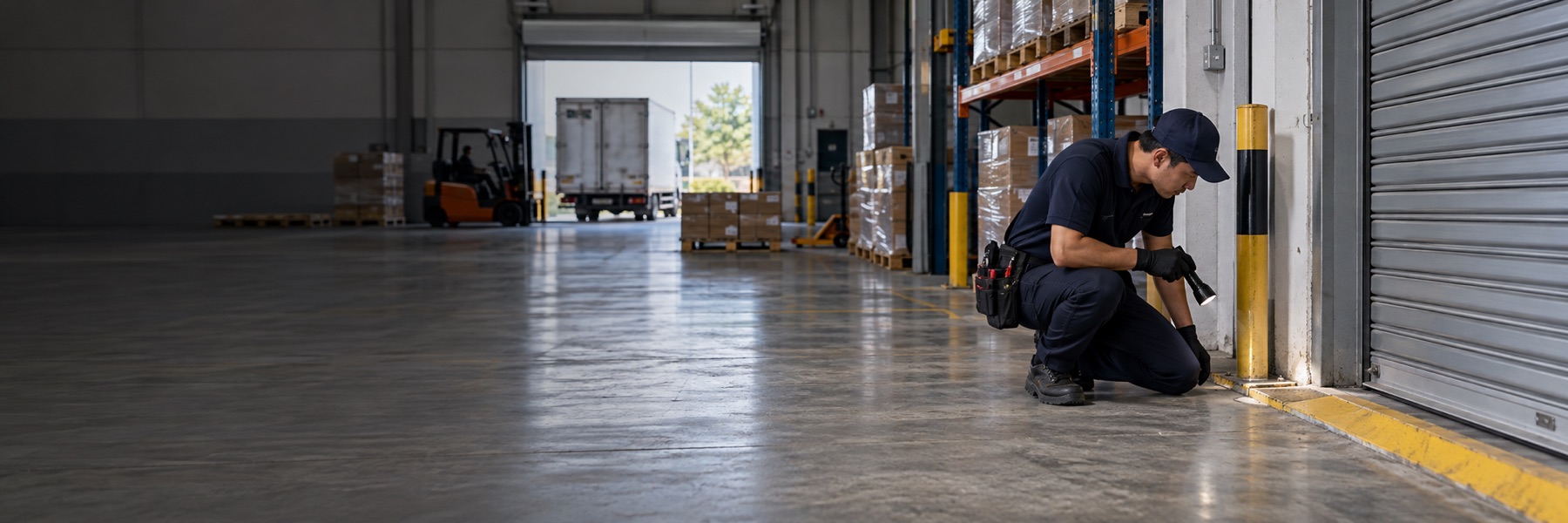
Protect stored goods and operations through site-specific control
Warehouses, factories and logistics sites bring together deliveries, stored materials, plant areas, people and waste. Pests can enter with goods, move through gaps or drains, and remain unnoticed in quiet storage or equipment zones. An effective programme starts by understanding those routes rather than treating only the point of a sighting.
Island Pest provides commercial pest-control support for factories, warehouses and industrial premises in Singapore. We review the activity reported, the relevant accessible areas and the way goods and people move through the site before recommending a scope. The aim is to address active pest evidence while identifying practical actions that reduce repeat activity.
Tell us what has been found, where it was seen, the materials stored, loading pattern, operating hours and any site induction or access requirements. Photographs, damaged packaging, droppings or captured specimens may help the initial discussion, but on-site findings are needed before a treatment plan is confirmed.
How the service works
Tell us
Share the site, signs, affected areas and operating constraints
Inspect
Assess relevant accessible areas and conditions supporting activity
Recommend
Explain the findings, proposed scope and required preparation
Treat & review
Complete the agreed work and outline monitoring or next steps
PEST MANAGEMENT FOR STORAGE AND INDUSTRIAL SITES
Where pest risks develop
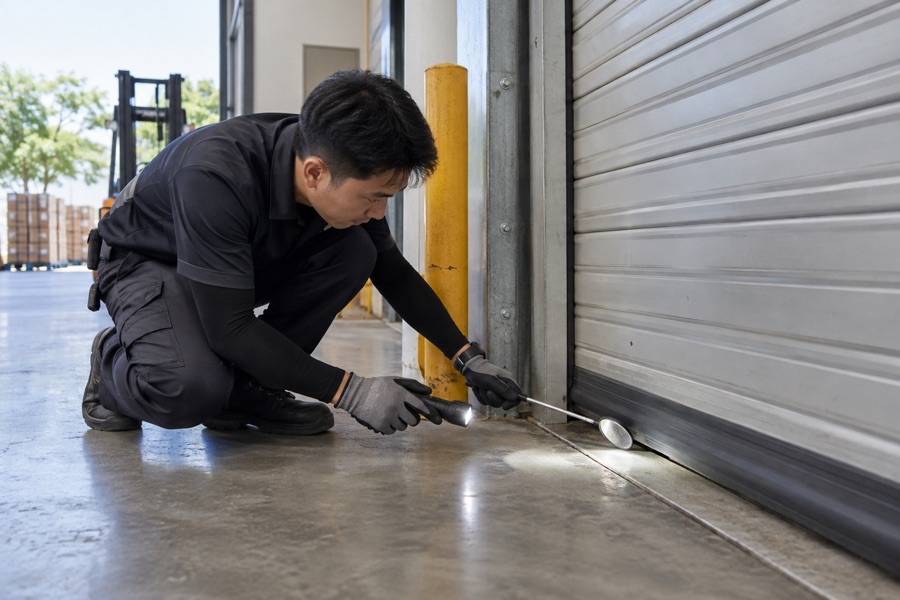
The perimeter and receiving process are important starting points. Damaged door seals, unscreened vents, gaps around services, open drains, vegetation, discarded pallets and poorly managed waste can provide entry or harbourage. Incoming goods may also carry insects or evidence from another point in the supply chain. Inside, long storage periods and limited access behind racking can allow activity to develop without frequent disturbance.
Relevant inspection areas may include:
- loading bays, roller shutters, dock levellers and pedestrian doors;
- incoming-goods and quarantine or returns areas;
- pallet stacks, racking edges, floor-wall junctions and voids;
- staff pantries, toilets, lockers and rest areas;
- production equipment, plant rooms, ducts and service penetrations;
- drains, bin areas, compactors and the external perimeter; and
- quiet stores, damaged stock and spaces affected by moisture.
Pests relevant to industrial and storage environments
Rats and mice may enter through building gaps or loading areas and leave droppings, gnaw marks or damaged packaging. Cockroaches can use drains, warm equipment and food areas, while flies may be linked to waste, moisture or organic residues. Ants, mosquitoes and termites can also affect particular sites.
Small beetles, moths or larvae found in dry goods may be stored-product insects. Their identification and source are important because discarding or isolating affected stock, inspecting adjacent products and changing storage practices may be as important as treatment. Island Pest’s stored-product-insect scope must be confirmed during the enquiry; do not apply household pesticide to exposed food or products.
Building a practical site programme
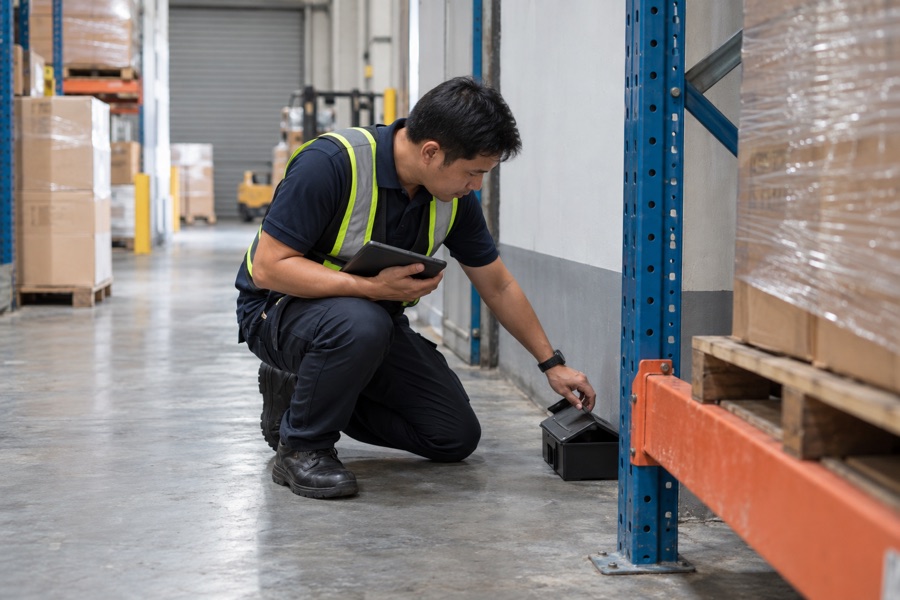
The programme should define included zones, pest priorities, device locations, inspection frequency, reporting route and responsibilities for corrective work. Monitoring points must remain accessible and should not be moved, blocked by stock or disturbed without coordination. Site teams can support the programme by recording sightings accurately and reporting damaged doors, leaks, overflowing waste or packaging damage promptly.
For larger sites, a location plan or consistent point names can make findings easier to act on. The service team should be able to distinguish an isolated capture from a trend across receiving, storage or production. When activity changes, the response may involve targeted treatment, moving or adding monitoring points, reviewing stock flow or asking the customer to correct a building or sanitation condition.

Working without unnecessary disruption
Warehouses and factories may operate long hours and have controlled access, vehicle movements, machinery, food or sensitive products. Before attendance, confirm the authorised contact, induction process, personal protective equipment requirements, restricted zones and safe service window. The proposed treatment must be compatible with the area and its use, and any necessary isolation or preparation should be explained in advance.
Do not assume that a product suitable for one area is suitable for every part of a facility. Storage of food, pharmaceuticals, packaging or other sensitive goods can require additional controls. Island Pest will discuss the relevant site information and proposed approach; the operator should also provide its own safety, product and audit requirements before approving work.
Follow-up and corrective action
Pest control is more effective when observations lead to action. A service report may identify a worn door seal, damaged drain cover, standing water, inaccessible spill, congested storage edge or unsealed pipe opening. Those items should be assigned to the appropriate facilities, cleaning, operations or contractor team and tracked to completion.
Retain service records and compare findings over time. The NEA’s Vector Control Operator guidance explains the importance of a defined scope, licensed personnel and records of inspection and treatment. Businesses handling food should also check the current requirements applying to their premises and products.
Receiving and storage practices that support control
Incoming goods should be checked in a designated area where damaged packaging, insects, droppings or gnawing can be noticed before stock is distributed. Keep receiving records where the source of an issue may matter. Suspect goods should be isolated according to the business’s product and safety procedures, not carried through clean storage or opened beside unaffected stock.
Inside the warehouse, maintain practical inspection space where the operating layout allows it. Stock pressed tightly against walls, deep pallet debris and long-undisturbed corners can hide evidence and block devices. Rotate stock, remove damaged packaging and clean spills promptly. These steps do not replace professional treatment, but they make inspection more reliable and reduce food and harbourage.
Using a monitoring plan
Monitoring points should have stable names or numbers and remain linked to their physical locations. Moving a device without recording the change weakens the history. Site plans, zone lists or photographs can help larger facilities keep points identifiable even when racking or production lines change.
A capture or damaged package should be considered with surrounding evidence. The service team may examine nearby doors, drains, stock, roof or wall routes before deciding whether local action is enough. Multiple findings across a route can justify broader investigation. The aim is not to collect devices but to use the information they provide.
Planning for incidents and change
Agree who should be contacted if a live rodent, widespread insect activity or affected stock is found. Protect people and products, preserve evidence safely and prevent suspect material from being moved unnecessarily. Treatment in a working facility must follow the site’s safety and access controls.
Update the pest-management scope after construction, new equipment, storage reconfiguration or a change in products. These changes can alter access, temperature, moisture and movement paths. Early discussion allows inspection points and service timing to be adjusted before an old plan becomes disconnected from the new layout.
Frequently Asked Questions
Does Island Pest serve factories and warehouses? | Yes. These premises are within Island Pest’s published commercial scope. The exact building, zones, pests and operating requirements are confirmed before service. |
Can the service cover loading bays and external areas? | Potentially. Include those areas in the site discussion so access, safety and the inspection boundary can be defined in the proposal. |
What evidence should we keep before the inspection? | Photographs, damaged packaging, droppings, capture details and the exact location and time can help. Preserve evidence safely without contaminating products. |
Does Island Pest fumigate stored goods? | Fumigation should not be assumed. Tell us about the goods and infestation so we can confirm whether the required work is within our current scope. |
Can pest activity arrive with incoming stock? | Yes, some insects or rodents may be associated with deliveries, pallets or packaging. Receiving and quarantine practices should be reviewed alongside building entry points. |
Will pest control repair doors and building gaps? | We can identify relevant conditions and recommend corrective action. Physical repairs are included only when they are expressly agreed. |